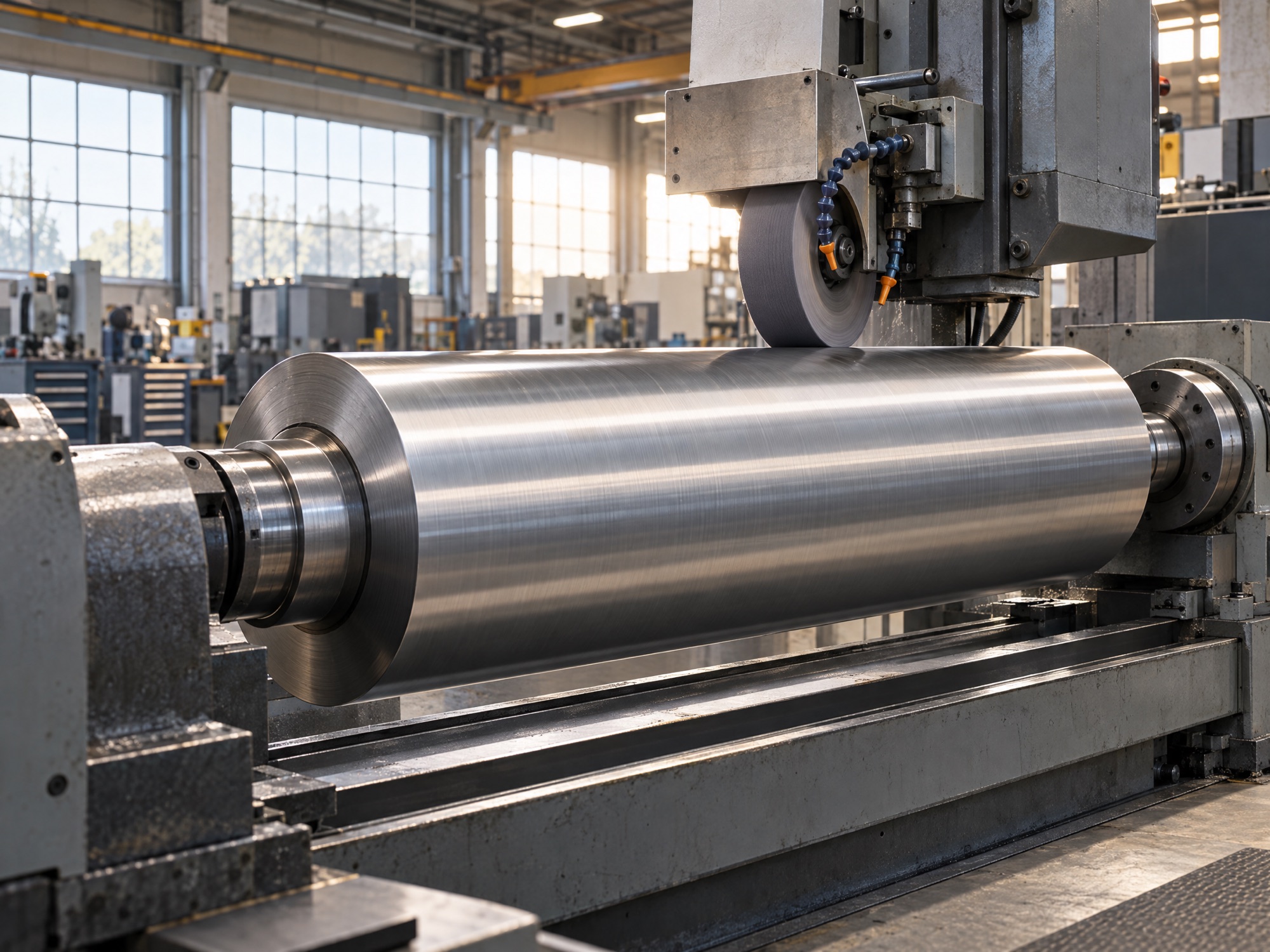
A coating roller should be selected for its position and function in a specific machine, not simply by matching a product name. A roller that transfers coating, supports the web or controls contact may require different surface and geometric characteristics.
Identify the process
Describe the coating method and identify where the roller sits in the line. Provide a sketch showing the web path, adjacent rolls, blade or coating head, drive and contact arrangement. Explain whether the goal is to replace an existing part or change the process. Gravure and electrode coating are distinct applications; their requirements cannot be inferred from the word ‘coating’ alone.
Match material and surface to duty
List the substrate, coating fluid, solvent or water, solids, cleaning agents, temperature and speed. These help assess surface compatibility and wear risks. If the drawing calls for a textured or treated surface, define the pattern or treatment and finished-surface acceptance criteria. Ask which options can actually be supplied for the project.
Define geometry and installation
Provide roll and face dimensions, journals, bearing fits, drive details, alignment references, runout requirements and relevant datums. Where a blade or adjacent roll is involved, describe the working gap or contact and the interface. If temperature control is required, state the medium, temperature and connection details rather than assuming a design.
Confirm inspection and next steps
Agree on how surface and geometry will be measured, what evidence is required and which drawing revision controls manufacture. Send photographs of the current roller and any defect, along with the desired quantity and installation schedule. Qichao can discuss coating roller manufacture or repair; suitability, tolerances and production scope require confirmation.