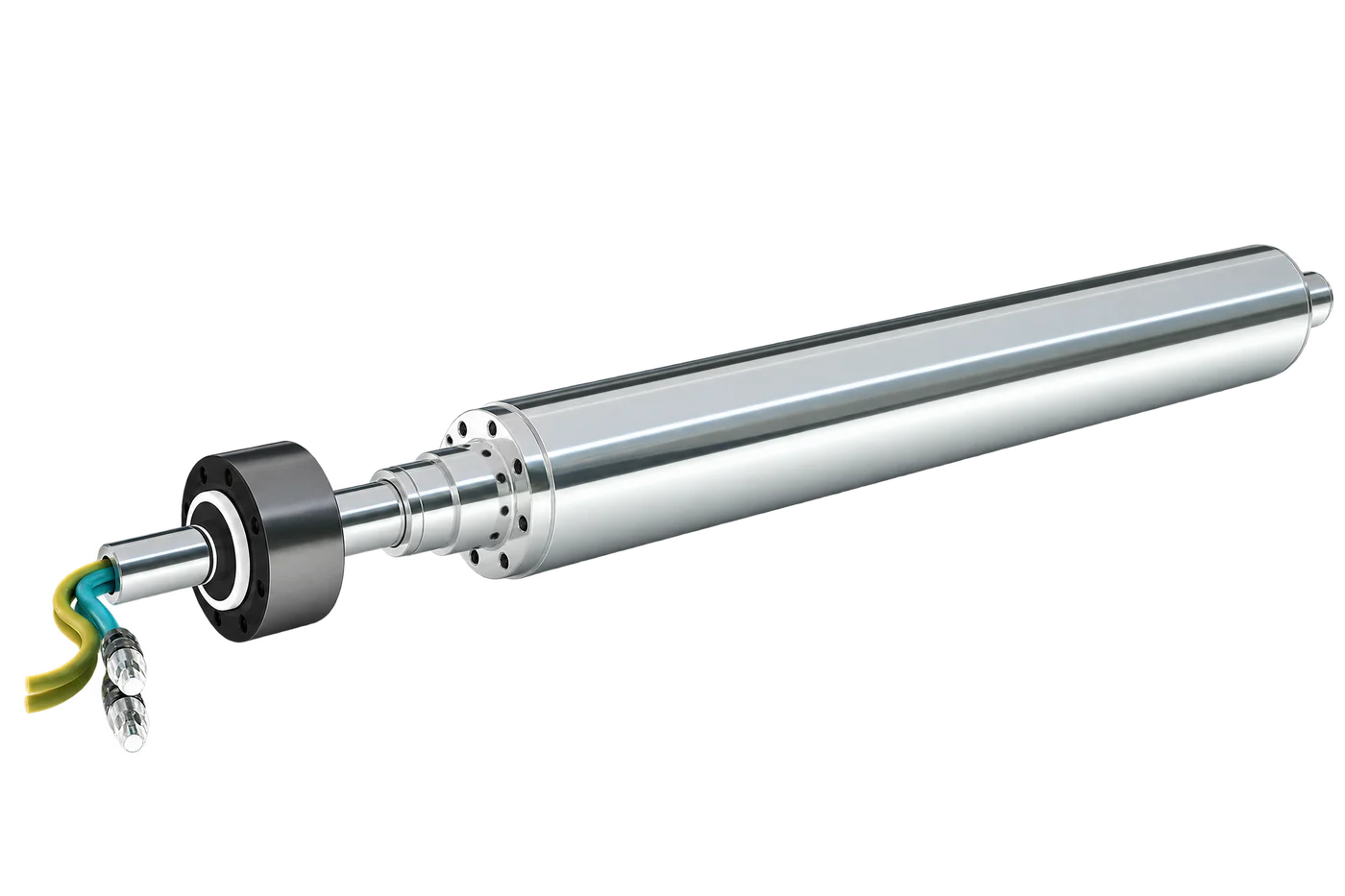
The best heating roll is the one that delivers the required heat to the material while fitting the line's utilities, controls and maintenance plan. Thermal-fluid circulation, electric resistance and induction are three industry approaches. They should be compared as complete systems, not by the roll alone. Availability for a particular heating roller project must be confirmed with the supplier.
Thermal-fluid circulation
A separate heater warms a thermal fluid, typically thermal oil, and a pump circulates it through the roll before it returns for reheating. The external heater may use electricity or fuel. This can make sense when a suitable fluid unit and pipework already exist or when a plant wants a shared heat supply. Check the heater capacity, flow, fluid temperature limits, hoses, rotary connections, insulation and expansion arrangements as a complete circuit. Fluid condition and leak inspection also belong in the maintenance plan. Surface temperature and response will depend on the roll, flow and production load, not merely on the oil setpoint.
Electric resistance heating
Resistance elements convert electrical energy into heat within or near the roll. One manufacturer's cartridge-heated design uses multiple heaters and slip rings; other designs can differ. Without a circulating fluid loop at the roll, there are fewer fluid connections to integrate, but power supply, electrical protection, sensor placement and access to replace components matter. Check how power and sensor signals reach rotating parts and whether the available electrical capacity meets the process duty. A controller's setpoint alone does not establish the actual surface temperature under load.
Induction heating
An induction coil creates an alternating magnetic field that induces current and heat in a suitable roll shell. In one arrangement, a stationary inductor is installed inside the rotating roll, transferring energy without a sliding electrical contact. Some systems offer separately controlled heating zones. The generator, roll material, internal geometry and controls must be compatible, so retrofit feasibility is not automatic. Ask about electromagnetic compatibility, guarding and access to service components. Induction should not be assumed to be faster or cheaper for every installation; compare complete designs on the same duty.
Compare on your production duty
Start with the material, contact time, line speed and required surface-temperature range. Ask each supplier to state where and how temperature is measured, including the operating load and acceptable variation. A measured surface value and a controller setpoint are not necessarily the same. Compare warm-up and recovery after a change in load using the same starting conditions and acceptance criteria.
For a useful whole-system comparison, ask for:
- Heater or generator, pump where applicable, controls, connections and installation scope.
- Energy use at equivalent throughput and standby conditions, plus the assumptions behind the estimate.
- Maintenance tasks, replacement parts, protective devices and planned access around the machine.
Service safely
Follow the manufacturer's shutdown and cooldown procedure and applicable local rules; some systems may require circulation during cooling. Before servicing, authorized personnel should isolate and lock out the drive, heating supply and other relevant energy sources, safely control stored energy and verify isolation. Confirm temperatures and any trapped pressure are safe before opening the circuit. In the US, OSHA's hazardous-energy standard specifies energy-control requirements for covered work.
Sources
- Pirobloc: Thermal fluid systems for calender rolls — circulation and system components.
- Kendrion: Inductors for heating rolls — induction arrangement and zoned options.
These sources describe their own technologies; their inclusion does not imply endorsement or a relationship with Qichao.