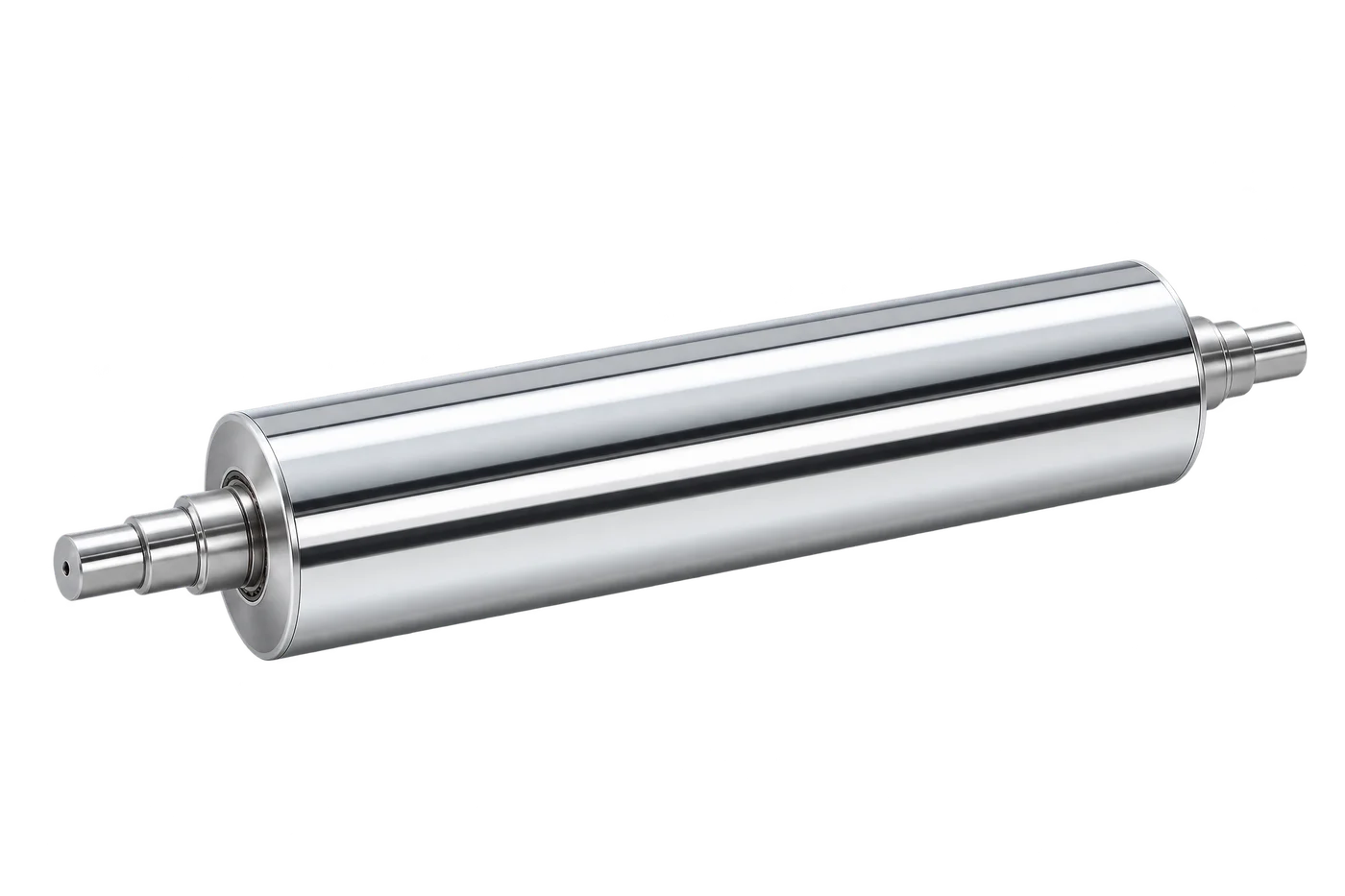
A scratch on a mirror finish roller can transfer a mark to a contacting material, but not every product defect originates at the roller. Handling damage, trapped grit and dried deposits deserve attention because they can affect the working face. The routine below focuses on prevention rather than assuming that every roller has the same coating or cleaner tolerance.
Protect the surface during receiving and installation
Inspect the packaging on arrival and record damage before opening it. Keep the working face protected until installation or inspection requires access. Use the roller maker's approved lifting points and support positions; do not rest the polished face on a hard surface or place a sling directly against it. Secure the roller against movement using the equipment supplier's instructions.
Use a clean, non-abrasive cover compatible with the actual finish and intended storage period. Avoid unapproved adhesive films, oils or corrosion inhibitors: residues may be difficult to remove or may affect the process. Store in a clean, dry area and prevent tools or other parts from contacting the working face. Check the cover periodically for contamination or trapped moisture.
Make cleaning safe and compatible
Before hands-on cleaning or inspection, stop the machine. Authorized personnel should isolate and lock out the relevant energy sources, control stored energy and verify isolation under the site's procedure and applicable rules. Account for electrical, pneumatic, hydraulic and gravity hazards as relevant, and allow hot parts to reach a safe temperature. Never wipe a moving roll or reach into a nip point. OSHA describes a printing-press case where bypassing guards to clean rotating rolls exposed workers to serious injury 2.
Identify the roller's actual surface and adjacent seal materials before choosing a cleaning agent. Follow the equipment and roller suppliers' instructions, the chemical safety data sheet and site rules for ventilation, protective equipment and fire risks. Use a clean, soft, lint-free, non-abrasive cloth with an approved cleaner. Remove loose grit by an approved method rather than rubbing it across the face; change the cloth when it becomes soiled. A chrome roller manufacturer warns against abrasive tools and unsuitable chemicals 1, but its recommendations are not a blanket approval for other finishes.
If residue remains, ask the supplier whether an approved cleaner and dwell time may soften it. Do not improvise with metal scrapers, abrasive pads or polishing compounds. Stop if the deposit cannot be removed safely.
Inspect, document and decide on repair
With the roller stationary and safely isolated, use suitable lighting to inspect the full accessible face. Record the location, direction and appearance of a mark, and photograph it against a consistent reference. Compare with earlier records and a sample of the affected product. A mark remaining after approved cleaning may need evaluation; a repeating product mark can be a clue, not proof that the roller caused it.
Escalate scratches, corrosion, pitting or lifting surface material to the responsible technician. Do not polish a small area by eye: material removal can alter the finish or geometry. A specialist should assess whether cleaning, refinishing or replacement is appropriate for the actual construction and acceptance limits. Any repair method and provider must be confirmed; no particular repair service is implied.
Before restart, use this short check:
- Remove cleaning materials and loose tools; confirm that the working face is clean.
- Refit guards and release lockout in accordance with the site's procedure.
- Record the inspection and monitor the first product after restart for recurring marks.
For product enquiries, see the mirror finish roller page and confirm the relevant surface and handling requirements.