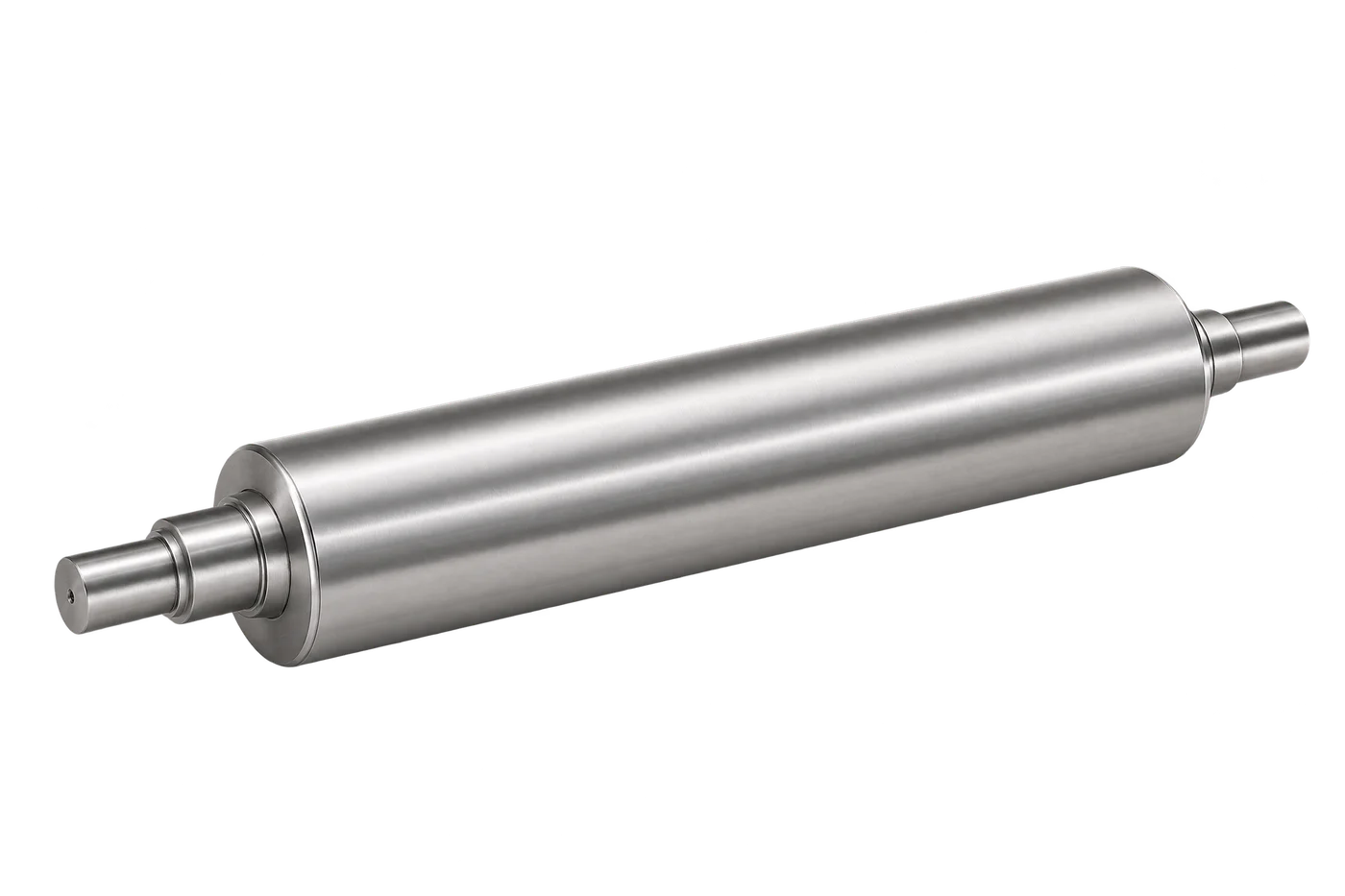
A damaged industrial steel roller does not automatically need replacement, but a smooth-looking surface is not proof that the roll is safe to reuse. Compare repair and replacement only after the damage, remaining material and machine requirements have been assessed. The following checklist helps a maintenance team prepare that decision.
Make the roller safe before inspection
Before hands-on inspection, removal or repair, authorized personnel should follow the machine-specific energy-control procedure and applicable local rules. Isolate and lock out hazardous energy as required; release or restrain stored energy, prevent unintended movement, and verify isolation before work. Consider electrical, pneumatic and hydraulic energy, gravity and nip points. If the roller contains hot or pressurized fluid, make it safe under the site's procedure before opening it. The U.S. OSHA standard covers these controls for servicing within its scope. 1
Record the damage and the reference dimensions
Use the machine drawing and the equipment maker's limits where available. Record measurements with their locations, measurement method and reference axis; photograph the defects and keep previous inspection results. Ask a qualified specialist to determine whether further testing is needed.
- Surface: Note scoring, dents, corrosion, coating loss or suspected cracks, and record their location and extent. A defect beneath a coating may not be visible until the surface is properly examined.
- Geometry: Measure diameter and total indicated runout against the specified reference. Compare the result with the drawing, not a generic tolerance. Check whether the intended finished diameter and, for a hollow roll, remaining wall meet approved limits.
- Ends and interfaces: Inspect bearing seats, journals, shaft connections and any damaged center holes. Check whether their geometry and fits still meet the machine requirements.
- History and duty: Record operating load, speed, temperature, previous repairs and recurring damage. Note internal passages or a surface layer if the design has them.
Decide whether an engineered repair is viable
If damage is confined and inspection shows enough material and an acceptable underlying structure, a specialist may propose grinding or another surface-restoration process. Grinding removes material; the resulting diameter must still work with the machine and the specified finish. Journal restoration is another possible industry option, but the method must suit the material, loading and condition.
Do not return a roller with a suspected crack to service merely because it can be polished. Segregate it for a qualified assessment, including nondestructive testing where appropriate. In one Western Machine Works case, testing identified a crack in one journal, which was replaced; a different, uncracked worn bearing fit was restored by thermal spraying. That example does not establish a safe repair for other rollers. 2
Favor replacement when an approved repair cannot restore the required geometry or integrity, when the allowable finished diameter or wall thickness cannot be maintained, or when the residual risk and downtime are unacceptable. A crack does not automatically dictate replacement of the entire roll: the disposition depends on its location, extent and an approved engineering assessment.
Compare the complete job, then verify acceptance
Compare both options over the same planning period. Include removal, inspection, transport, repair or new manufacture, installation, testing and production downtime. A spare roller may change the downtime calculation. Ask each supplier for its scope, lead time and any exclusions; repair is not always faster or less expensive.
Before return to service, agree on the acceptance record: relevant dimensions, runout reference, surface condition and any required test results. Reinstall and restart only under site procedures after the work area and personnel are safe. For a replacement inquiry, discuss your industrial steel roller requirements with Qichao and confirm its available manufacturing or repair scope.