Industrial Steel Roller
Industrial steel rollers for machine builders and production teams, specified around the operating duty, interfaces and required surface condition.
Start a conversation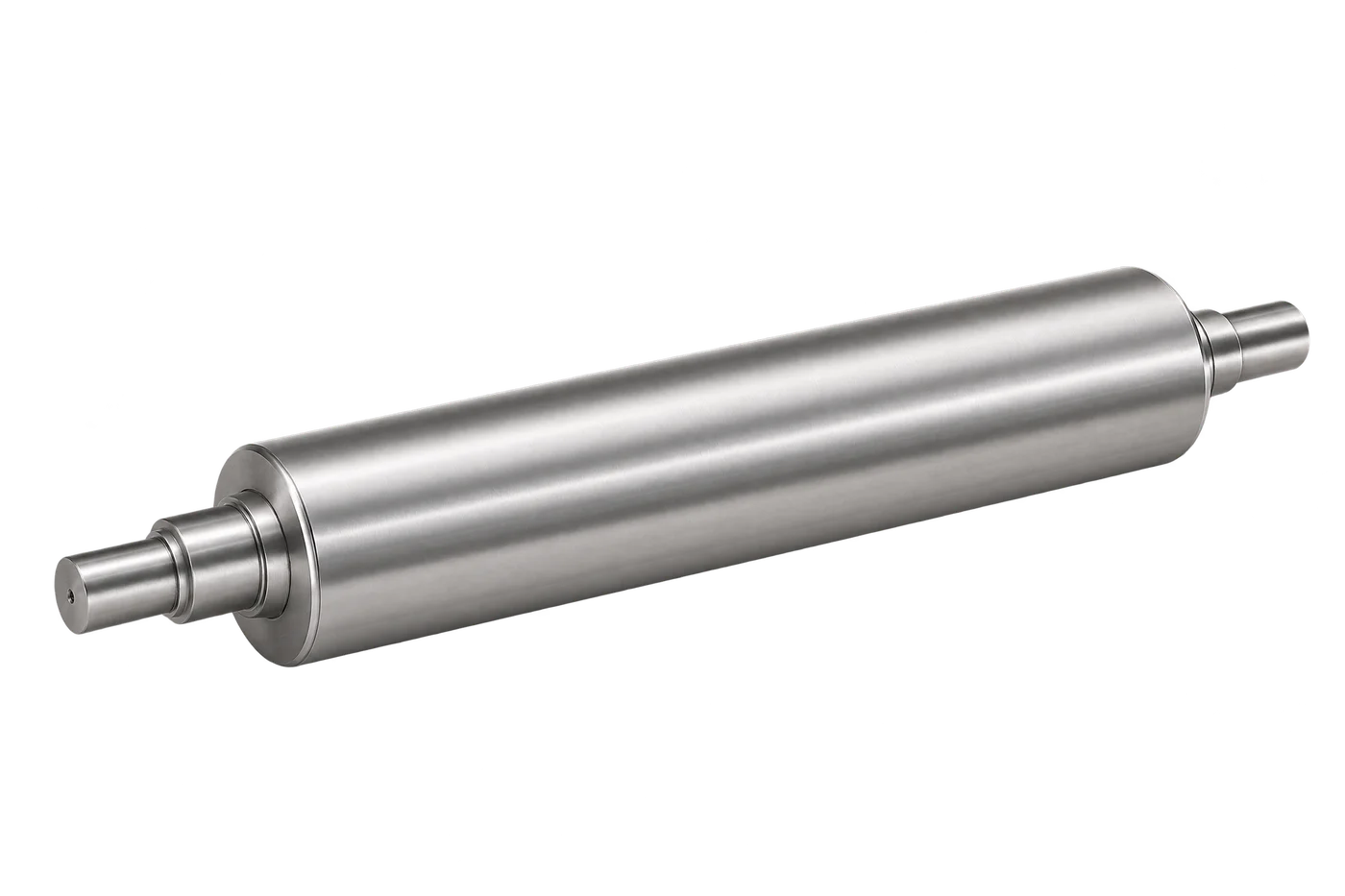 Illustrative imagery
Overview
Built around the machine
An industrial steel roller is a rotating component used to support, guide or process material in a production line. Its suitability depends on the machine design and operating duty, not simply on its outside diameter. Before choosing a replacement, establish the working width, load, speed, mounting arrangement and the material that contacts the roll.
Define the body and shaft dimensions together with the bearing fits, drive connection and any other interfaces. Surface condition and permissible runout should be agreed against the actual process and drawings. Where the roller has a coating or an internal passage, identify its construction and operating conditions rather than assuming that all steel rollers share the same design.
Plan for inspection and service
When a roller is damaged, inspection can help distinguish a local surface defect from a problem affecting the journal or body. Depending on the condition and engineering approval, grinding, surface restoration or journal repair may be industry options; some rollers may instead require replacement. None of these methods is suitable without checking the remaining material, tolerances and the proposed repair process.
For an inquiry to Wenzhou Qichao Roller Co., Ltd., share the drawing, application, available measurements and photos of any damage. Ask Qichao to confirm the available product configuration, manufacturing scope and whether any requested repair or finish can be supported before ordering.
Applications
- Paper or film web handling, where the roller design suits the line
- Converting and laminating equipment, subject to process requirements
- Metal strip or sheet handling, where load and surface requirements permit
- Textile production equipment, according to the machine design
What to consider
- Roller configuration assessed against load, speed and machine interfaces
- Dimensions, bearing fits and surface condition specified for the application
- Runout and acceptance criteria agreed against the relevant drawing
- Surface treatment, internal construction and repair availability subject to confirmation
Every line is different.
Dimensions, material, finish and operating requirements are confirmed for each project. Please share your drawing or operating conditions when requesting a quote.
Start a conversation